Thursday, April 2, 2015

Walking the Walk: Maundy Thursday Musings


You know the phrase.“That person, he doesn’t just talk about his faith; he shows it. And her? She embodies God’s love when she cares for those who are hurting.” They don't just talk the talk; they walk the walk. 

Tonight our church joined Christians of many times and places in celebrating Maundy Thursday. This is one of those services with the opportunity to walk: walk forward for confession and absolution, for a footwashing, for a holy meal. The words are powerful, yes, but so are the actions. Yet each year as I experience this service, I come away scratching my head. I leave saddened because so many choose not to walk, but to sit and watch.

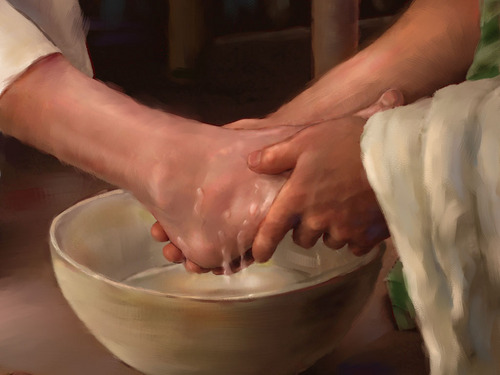
Jesus gives a new commandment about loving one another and then shows us one powerful way we can experience this, a way to practice walking the walk by taking off our shoes and letting another pour water over our feet and dry them with a towel. Yes it is a symbol, but the symbol works on us, perhaps a little like water over rock. 

When my oldest son was a toddler, I remember him embracing this enactment of faith; his eye’s lit up when the water fell on this feet; he loved helping his parents wash others feet. Then, as years went on, he became Peter; no one was going to wash his feet. Ever.

Tonight he washed feet. So did his brother. So did the other four children in our children’s choir and a few parents. You see, tonight I was brave, foolish perhaps. I decided months ago that the children’s choir would help lead both Maundy Thursday and Easter Vigil worship. As part of our rehearsals, I talked about the footwashing; they knew it was coming. So when it was time, we went downstairs. I took off my shoes and encouraged my oldest, my “you’re not going to wash my feet” son to pour the water. His “helper” personality emerged and there we were, washing feet. We were no longer parent and child; we were children of God doing unto one another, serving one another. 

I wish I could stop here and revel in the Spirit’s work. And, at the end of the day, I do end up back at this place, a place of awe and gratitude for the courage, wonder, and innocence of these children and a few brave adults. I will now hear the Taize “Ubi Caritias” mingled with the voices of children as they, like trying on a pair of new shoes, tried this ritual on, many for the first time.

I wish I didn't feel dismay and bewilderment at so many who choose not to experience the foot washing; I know it is an invitation, not a compulsion. Jesus doesn’t command us to wash feet; he commands us to love one another. I know that those who don’t wash feet still show tremendous love for their neighbors in ways known and unknown, seen and unseen. 

Those children, they have so much to teach us. Having a childlike faith involves our whole selves: we are more than minds and hearts; we are bodies, beautiful bodies made in the image of God. Our feet may have walked difficult roads; they may be callused and blistered, cracked and malformed. But oh, how beautiful are the feet of those who bring peace and good news! 


Monday, March 30, 2015

Beyond the Bunnies

 A bit of mommy guilt crept in today. Perhaps it was the “egg” homework assignment given to my seven year-old or the dinner conversation my eight year-old initiated about hiding their Easter baskets. While other families may have been making bunny crafts or shopping for dresses and matching shoes, this was our first talk about Easter… well, about THAT Easter. 

It’s not that I’m anti-bunny or egg. We do have a tradition of dyeing eggs on Holy Saturday and making some kind of sweet treat on that day. But that’s about it because our home life reflects our church life. My children have a pastor for a dad and a church musician for a mom.
It’s Holy Week. Need I say more?

Perhaps I don’t need to, but I will… just a little. When I felt that twinge of guilt, that twinge of not diving headfirst into the pastel-hued, sugar explosion that passes as Easter, I realized what my children do get:

To sit at the foot of another and have their feet washed; to wash another’s feet. 
When I asked my children’s choir what they needed to remember about the Maundy Thursday liturgy, one girl piped up: “we can’t wear tights with our dresses.”

To hear the passion story of Jesus sung in notes written five hundred years ago, but brand new to their ears.

To hold a candle lit from the new fire, to sing and play instruments, to rejoice when the sister of a fellow choir member and friend is washed in the waters of Holy Baptism, to stand in a circle and receive the feast of Jesus.

To shout, sing and carry “Alleluia!”

It’s not the Easter the store circulars advertise, but I trust for me and for my children that it is the “Three-Day Feast” that will nourish long after the sugar rush has expired.


Thursday, March 26, 2015

Indiana: Freedom from or Freedom for?

I have this shirt. A friend of mine was moving to a shoebox apartment and needed to majorly downsize. Sorting through her boxes of clothes, I gratefully picked a few items including the purple (my favorite color) t-shirt with the phrase: “Gay? Fine by me.”

The shirt conveys tolerance; that’s a start. But the recent news out of Indiana, the state that  I called home during college, reminds me that tolerance doesn’t go far enough. I can tolerate people, but that doesn’t mean I need to do business with them.

A few weeks ago I finally watched The Butler (still wanting to see Selma). As I watched, I wept. The scene of the bus riots left me sick to my stomach, with supposedly “good Christian folk” spitting, yelling profanity and setting fire to those “freedom riders.” An article I found from 1961 notes,

The trouble at the Negro First Baptist Church erupted this evening when a crowd of white men, women and children began throwing stones through the windows as black civil rights leader Dr Martin Luther King was speaking.

A church. The fire of those violent riots found their spark in a church. The bill in Indiana (and other states that have such laws) are somehow meant to protect freedom. But there are two kinds of freedoms: “freedom from” and “freedom for.”

We can want to be free from all kinds of things we don’t like. I could want to go live on an island where everyone ate local food, played Bach and read books. That’s not reality. I sense that those whose religious convictions encourage them to not associate with those who don’t share their views are motivated by “freedom from:” freedom from those who might not have the lifestyle, exact views or background that I do.

Many news stories, blogs, tweets and FB posts have voiced opposition to Indiana’s law such as this one by the Episcopal Diocese of Indianapolis. These believers insist that to be a religious person, to believe in religious freedom, does not automatically put one in favor of a bill such as this one. I count myself among them. Though it is more challenging, I think we are called to live as “freedom for” people: freedom for love because God has shown love; freedom for mercy because God has shown mercy; freedom for acceptance because God has shown acceptance, especially to those the religious people were nervous about.


T-shirts don’t change hearts and minds; I don’t expect this post will either for those of my friends or family that disagree on these points. Yet I write it out of a conviction that I have been so richly blessed in my life by gay and lesbian friends and mentors; I want to know that in whatever state they’ll travel, they are met with grace and acceptance, the same kind that overflows from the God that accompanies us on every journey.

Sunday, March 22, 2015

Texts.Water.Seeds: Gaining by Giving Up

Three people. That is the number I witnessed driving cars today while texting. I could tell they were texting by the way their eyes were glued to their lap. And this was just on a short nine-mile drive from our church to our home via Rt. 522.

I’ve watched the awareness-inducing videos. I’ve seen the bumper stickers. I wonder if these people who text and drive have seen them. But it doesn’t matter because those things “will never happen to me.” After all, it’s only for a minute and this is so important. 

My last post about gratitude questioned how the awareness of the giftedness of life leads to creative power.  I thought of that this morning after I cursed the drivers (I feared honking my horn would cause them to swerve). What can I do, with my power, to make a difference?  Do I just need to resign myself to “this is the way it is,” that we are forever tethered to our technological umbilical cords?

Today, March 22 is World Water Day, one of those “awareness days.”  Again, we are right to be grateful for the gift of water. But does this gratitude lead me to take a shorter shower? Eat less meat? Forgo watering my lawn so it no longer looks like the cover of Better Homes and Gardens?

Today the Church marks the Fifth Sunday in Lent when we hear Jesus’s words recorded in John 12: “Very truly, I tell you, unless a grain of wheat falls to earth and dies, it remains just a single grain; but if it dies, it bears much fruit.” To gain, something is given up. 

Texting. Water. Seeds.  Why mention these three things together? Because at the heart of each Sunday story, I believe, something needs to die so that new life can spring forth.

Texting while driving forgets the neighbor, the neighbor in proximity, the one with whom we share the road. We are not loving neighbor as self because we fear another conversation just can’t wait; we are too important and too busy. Does this need to die before more die on our roadways?

The current American lifestyle requires a tremendous amount of water. According to this NPR report, “the average American, taking a 5-minute shower, uses more water than an average person in the slums of a developing country in a whole day; and a 5-minute shower is on the short end for most people.” For many, we are simply thankful to enjoy this abundance, but we don’t see that our abundance is not sustainable.

“Seed that on earth is dying…rises to bear much fruit” we sang this morning. A seed, a little thing, gives of its life so that something can grow. Denying ourselves may seem so un-American.  And no, I don’t believe that we deny ourselves to win brownie points with God. But if we are indeed grateful for our technology and for our natural resources, how does that gratitude spill over into action on behalf of the neighbor?  

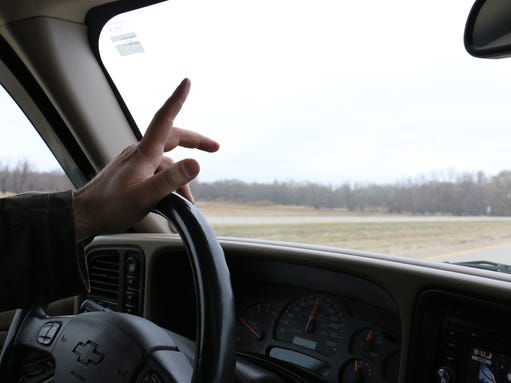
A text, a five-minute shower, a seed. Little things, indeed. But as we know, life is made up of a series of little things that matter. The text can wait. Let’s look up. Or, if so inclined,  go as far as the some drivers in rural Minnesota: give the friendly "finger off the steering wheel" wave to whomever you pass by.


Friday, March 20, 2015

Gratitude as "the new thing"

“Radical gratitude begins when we stop taking life for granted.”
                                                                                    -Mary Jo Leddy, Radical Gratitude

“I am about to do a new thing; now it springs forth, do you not perceive it? (Isa. 43:19)
                                                                                  

Gratitude is on my mind today. Not some kind of rose-colored glass gratitude, a hazy gratitude that pretends all will be sunshine. Not a gratitude of oughts: “you ought to be thankful; see what he gave you? Did you remember to write your “thank-you” note?” No I am thinking about a gratitude that helps us see more clearly and doesn’t shy away from the shadows, a gratitude that springs forth by realizing our fragility as creatures.

This morning while I was at work, my husband called to tell me that an accident on the main drag, the route we drive every day, claimed the life of an elderly couple that had attended our church. The roads weren’t good on this snowy first day of spring.  To process the news, I began some conversation with a co-worker and customer about accidents in general, about driving, about death. It wasn’t a rosy conversation but a real one about how “you just don’t know.”

I could say, then, that the response to tragic news is gratitude: hugging your children tighter, embracing and not cursing a March snowfall, awareness of the inhalations and exhalations that tell us we are alive. This is all fine, of course, but I have always been inspired by the wise counsel of Mary Jo Leddy in her book Radical Gratitude, counsel that opens gratitude to more than private thankfulness.

“Gratitude will forever remain a nice and sometimes comforting attitude until and unless we also consider whether or not we have the power to make changes in our lives and in our world,” urges Leddy. This is, I think, the perception of newness Isaiah calls us to. “The new thing” begins of course, with gratitude. But how does this awareness of the giftedness of life—our own, one another’s, the creation itself— lead to creative power?  And how does gratitude open us to another’s pain rather than make us fearful of losing what we have?

More musings on those questions as we continue on this Lenten journey.